

Risk management
What Is a Stop-Loss Order? Types, Examples, and Limitations
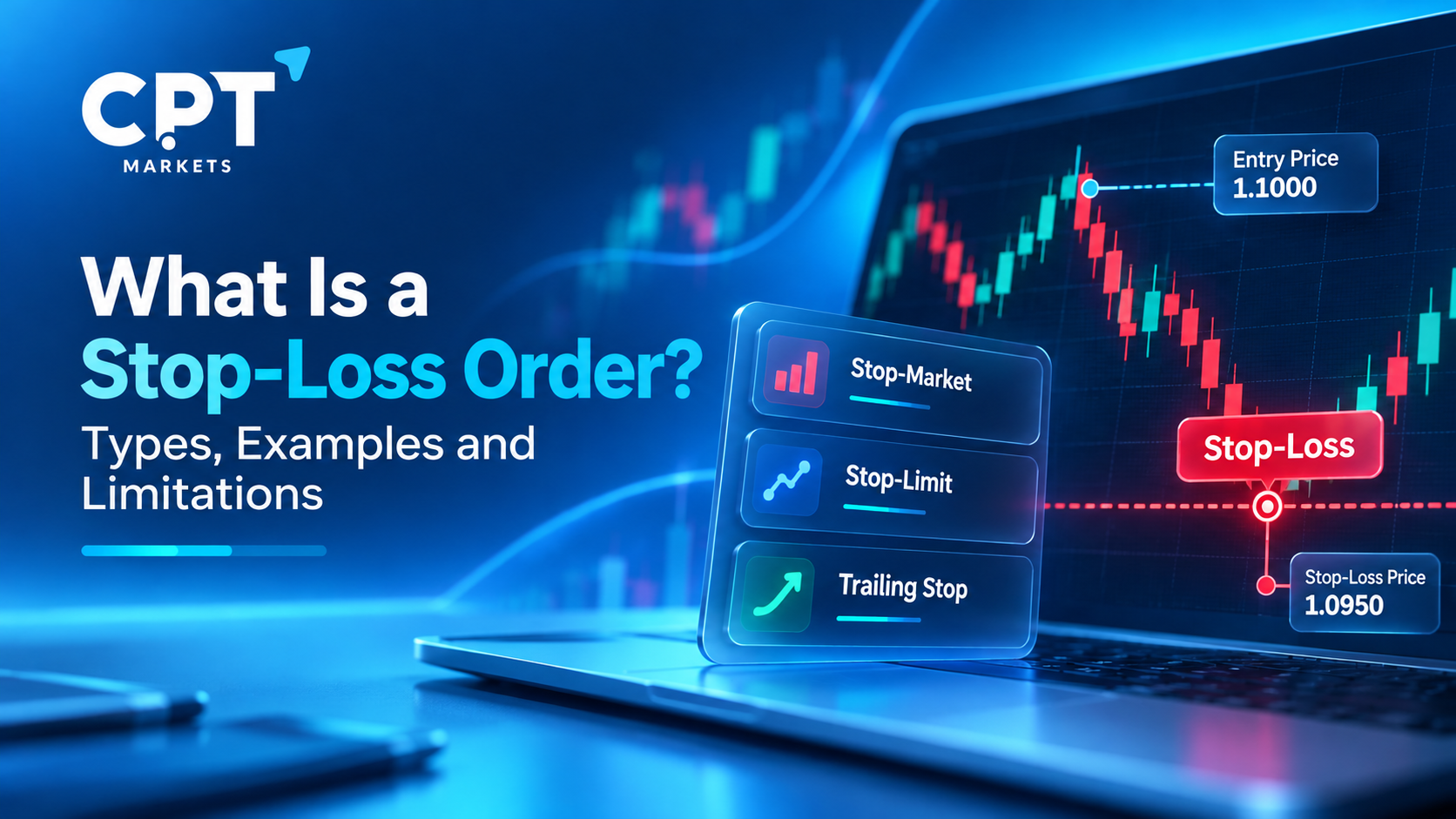
A stop-loss order is an instruction to close a trading position when the market reaches a specified price, helping traders manage potential losses or protect existing profits. Depending on the order type and trading platform, the instruction may trigger a market order or a limit order. However, a stop-loss does not guarantee an exact exit price or prevent losses from exceeding the planned amount.
What Is a Stop-Loss Order?
A stop-loss order is a risk-management tool that instructs a broker or trading platform to initiate an exit when a specified trigger price is reached. Traders commonly use it to define an exit point before entering a trade, rather than relying entirely on manual intervention when prices move against them.
For example, suppose a trader buys EUR/USD at 1.1000 and places a stop-loss at 1.0950. If the relevant price reaches 1.0950 and triggers the order, the platform initiates the closing process according to the applicable order rules.
The final execution price may differ from 1.0950, particularly during volatile markets or when prices move rapidly. Therefore, the stop-loss defines a trigger or intended exit level, not necessarily the maximum possible loss.
Stop-loss orders are relevant to forex, stocks, and other markets, although the available order types and trigger rules depend on the instrument, broker, and trading platform.
How Does a Stop-Loss Order Work?
A stop-loss generally follows three steps:
1. Choose the Trigger Price: The trader specifies the price at which the order should activate.
2. Wait for the Trigger Condition: The relevant market price reaches the specified level under the platform’s applicable rules.
3. Process the Exit Order: Depending on the order type, the platform submits a market order or activates a limit order.
For a long position, traders commonly place a stop-loss below the entry price. For a short position, they generally place it above the entry price. These placements aim to close the position if the market moves against the intended direction.
The trigger price alone does not determine the final financial outcome. Position size, the execution price, transaction costs, and the contract’s specifications can all affect the realised result.
Traders should also check whether the platform triggers stops using bid prices, ask prices, last-traded prices, or another specified price reference. This distinction matters because different price references can produce different trigger outcomes.
What Are the Main Types of Stop-Loss Orders?
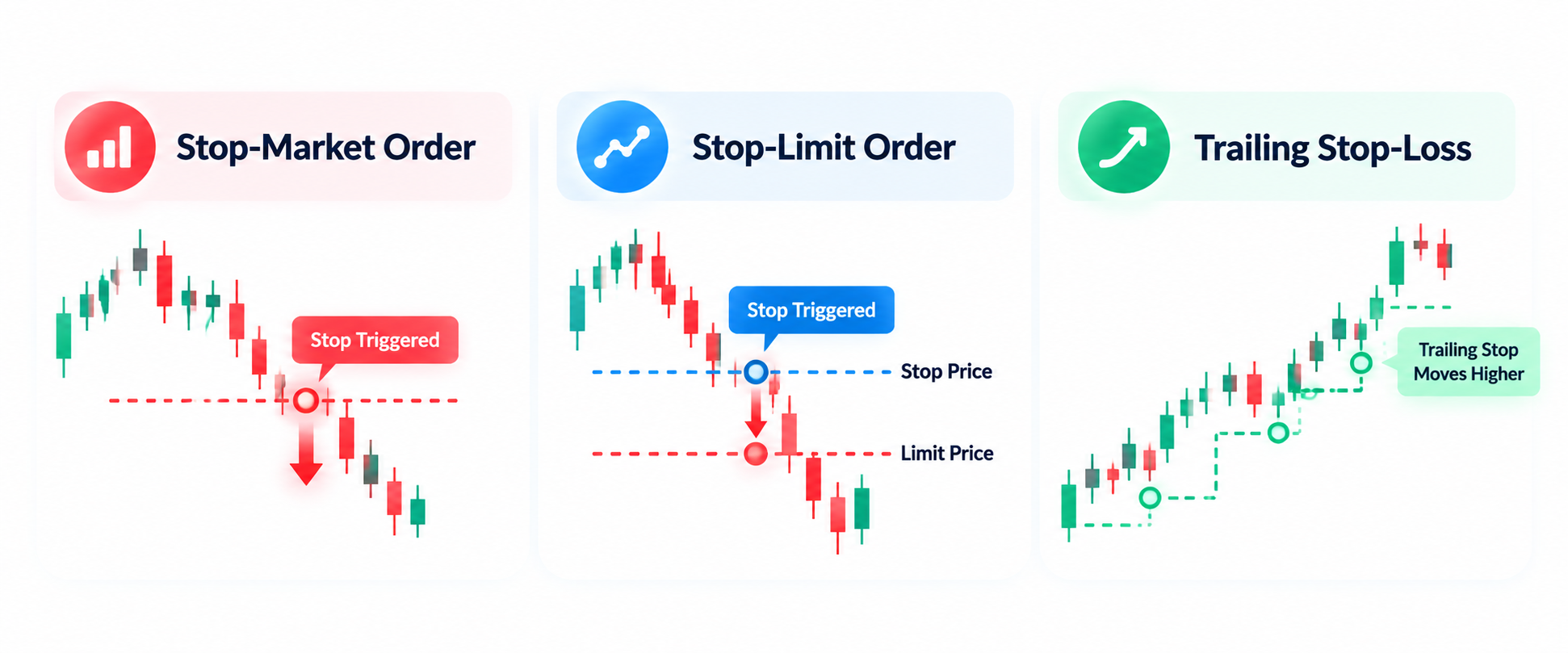
Stop-loss orders differ in how they handle execution after the trigger condition is met. The main distinctions are between stop-market orders, stop-limit orders, and trailing stops.
1. Stop-Market Order
A stop-market order becomes a market order when the specified stop price is reached. Its main objective is to initiate an exit without requiring the market to remain at a particular price.
For example, a trader buys EUR/USD at 1.1000 and sets a sell stop at 1.0950. If the stop triggers while the available execution price is 1.0946, the order may execute around 1.0946 rather than 1.0950.
The advantage is that the order seeks execution at the available market price after triggering. However, unlike a stop-limit order, it does not specify a minimum acceptable execution price. In fast-moving markets, the difference can be material.
2. Stop-Limit Order
A stop-limit order combines a stop trigger with a limit price. Once the stop price is reached, the order becomes a limit order that can execute only at the limit price or better.
Suppose a trader holds EUR/USD and sets a sell stop at 1.0950 with a limit price of 1.0940. Once the stop triggers, the order can sell at 1.0940 or a higher price, subject to the applicable market and order rules.
However, if the market moves below 1.0940 and no eligible buying interest is available at the limit price or better, the order may remain unfilled. The trader could therefore retain the position while the market continues to move against them.
A stop-limit order offers greater control over the acceptable execution price, but it does not guarantee that the position will close.
3. Trailing Stop-Loss
A trailing stop adjusts its trigger level as the market moves favourably, according to the trailing distance and rules set for the order.
For example, suppose a trader buys an instrument at 100 and sets a trailing distance of five price units. If the market rises to 110 and the trailing mechanism follows the highest eligible price, the stop may move to 105. If the market subsequently falls, the stop remains at 105 rather than moving down with the price. Reaching that level then initiates the exit process, subject to the platform’s rules.
The exact behaviour depends on the platform. Some trailing stops use a fixed price distance, while others may support percentage-based or other trailing rules.
A trailing stop can help maintain a predefined distance from favourable price movements without requiring the trader to adjust the level manually. Nevertheless, it cannot guarantee that profits will be retained or that the final exit will occur at the trailing stop price.
Comparison of Stop-Loss Order Types
|
Order Type |
Main Characteristic |
Key Limitation |
|
Stop-Market |
Becomes a market order after triggering |
Execution price is not guaranteed |
|
Stop-Limit |
Becomes a limit order after triggering |
May not execute |
|
Trailing Stop |
Adjusts the trigger as the market moves favourably |
May execute at a different price or fail to close at the intended level, depending on the mechanism |
The most suitable order type depends on the trader’s priorities, the instrument, and the available execution rules. Neither price control nor an intention to exit removes market risk.
How to Calculate a Stop-Loss Using an Example
A stop-loss level can be considered alongside the entry price and position size to estimate the potential loss if the position closes at the intended level.
Consider this hypothetical example:
· Instrument: EUR/USD
· Position: Buy
· Entry Price: 1.1000
· Stop-Loss Price: 1.0950
· Position Size: 10,000 EUR
· Assumed Execution: Exactly at the stop price, before costs
The price difference is:
1.1000 − 1.0950 = 0.0050, or 50 pips
For a EUR/USD position of 10,000 EUR, the estimated loss at the stop price is:
Loss = 10,000 × 0.0050 = USD 50
This calculation assumes the position closes at 1.0950 and excludes spreads, commissions, financing charges, and other applicable costs. It is an illustration, not a prediction of the actual result.
If the order executes at 1.0940 instead, the price difference becomes 60 pips. The corresponding loss before costs would be USD 60.
This example shows why traders should distinguish between the planned loss at a stop level and the realised loss after execution. A stop-loss can support risk planning, but the actual outcome depends on the market and execution conditions.
Explore account information
Review account details, terms, and risks on the official CPT website.
What Are the Limitations of a Stop-Loss Order?
Although stop-loss orders can support a structured risk-management process, they do not eliminate trading risk.
Slippage
Slippage occurs when an order executes at a different price from the expected or requested price. For a stop-market order, the final execution price may be worse than the trigger price when market conditions change quickly or available liquidity is limited.
Consequently, the realised loss may exceed the amount estimated using the stop price.
Market Gaps
A market gap occurs when the next available price differs substantially from the previous price, with little or no trading at intermediate levels.
For example, an instrument may close at 100 and reopen at 94. A sell stop at 98 may trigger when trading resumes, but the available execution price could be around 94 rather than 98.
The difference can increase the loss beyond the amount originally planned. Stop-limit orders introduce a different risk: the market may move beyond the limit price without executing the order.
Short-Term Price Fluctuations
A brief price movement can trigger a stop-loss even if the market later returns to its previous range. This can result in an exit that would not have occurred if the trader had remained in the position.
However, placing a stop further away does not automatically improve risk management. It changes the potential loss and should be considered alongside position size and the trading rationale.
Trigger and Execution Rules
Stop-loss behaviour varies by platform and instrument. A stop may use bid, ask, last-traded, or another specified price reference, and the rules governing activation can affect whether and when it triggers.
Traders should check the broker’s order documentation, instrument specifications, and execution policy before relying on a particular stop mechanism.
Costs and Leverage
A stop-loss does not remove spreads, commissions, or financing charges that may apply to a trade. In leveraged trading, relatively small price movements can also have a substantial effect on the account’s equity compared with the margin committed.
Therefore, the distance between the entry price and stop level is only one component of risk. Position size, costs, leverage, and the possibility of adverse execution also matter.
How Can Traders Use Stop-Loss Orders More Effectively?

A structured approach can make stop-loss orders easier to understand and incorporate into a trading plan. However, no method guarantees a particular result.
1. Define the Exit Rationale: Consider what market movement would invalidate the original trading idea rather than selecting a level solely because it represents a convenient cash amount.
2. Calculate the Potential Loss: Estimate the loss at the intended stop price using the position size and price difference. Include relevant transaction costs where possible.
3. Check the Position Size: A wider stop distance increases the estimated loss for the same position size. Conversely, reducing the position size can reduce the estimated monetary loss at a given stop distance.
4. Understand the Order Mechanics: Confirm how the platform triggers and processes the order, whether trailing stops are supported, and whether the chosen order type can remain unfilled.
5. Review Exceptional Conditions: News announcements, market openings, and periods of reduced liquidity can affect prices and execution. A stop-loss should not be treated as a guarantee against these risks.
6. Review the Outcome: Compare the intended exit with the actual execution and account for any difference when assessing the effectiveness of the trading process.
For further background, readers can explore forex trading and learn more about lot size in forex to understand how market exposure and position size relate to trading risk.
Key Takeaways
A stop-loss order initiates an exit when a specified price condition is met. Stop-market orders prioritise execution at available prices, while stop-limit orders restrict the acceptable execution price but may remain unfilled. Trailing stops adjust their trigger as the market moves favourably, subject to platform rules.
Most importantly, a stop-loss is a risk-management tool, not a guarantee against losses. Slippage, market gaps, short-term fluctuations, trading costs, and leverage can all affect the outcome. Understanding these limitations helps traders assess the difference between a planned exit and the result they may actually receive.
Explore the CPT Markets Demo Trading Account to familiarise yourself with order types and platform functionality using virtual funds.
Risk Warning: CFDs and leveraged forex trading involve significant risk and may not be suitable for all investors. Losses can occur rapidly, and execution may differ from the intended price. Ensure you understand the relevant risks, product terms, and applicable account conditions before trading.
Frequently Asked Questions
1. What Is a Stop-Loss Order in Forex?
A stop-loss order in forex instructs the trading platform to initiate an exit when a specified price condition is met. It can help traders plan an exit if the exchange rate moves against a position. However, the final execution price may differ from the stop level, particularly during volatile markets or price gaps.
2. Does a Stop-Loss Guarantee That You Will Not Lose More Than Planned?
No. A stop-loss does not guarantee a specific execution price or maximum loss. Market gaps, slippage, and transaction costs can cause the realised loss to exceed the estimate based on the stop level. The extent of the risk depends on the instrument, order type, position size, and applicable execution conditions.
3. What Is the Difference Between a Stop-Market and a Stop-Limit Order?
A stop-market order becomes a market order after its trigger price is reached, seeking execution at available market prices. A stop-limit order instead becomes a limit order and can execute only at the specified limit price or better. Therefore, a stop-limit order offers price control but may remain unfilled if the market moves beyond the limit.
4. What Is a Trailing Stop-Loss?
A trailing stop-loss adjusts its trigger level as the market moves favourably, according to a specified distance or other supported rule. It can help traders maintain an exit level that follows favourable price movements. However, the stop does not necessarily execute at its trigger price, and the precise mechanism depends on the platform and instrument.
5. Can a Stop-Loss Be Triggered Before the Market Reverses?
Yes. A temporary price fluctuation can reach the stop level and initiate an exit even if the market subsequently moves back in the original direction. This is one limitation of stop-loss orders. The outcome depends on market volatility, the trigger rules, and the position’s stop level.
6. Where Should a Stop-Loss Be Placed?
There is no universally appropriate stop-loss level. The placement depends on the trading strategy, instrument, market conditions, position size, and acceptable risk. Traders can assess the price level that would invalidate their trading rationale and calculate the corresponding potential loss. This is general educational information, not personalised financial advice.
Explore account information
Review account details, terms, and risks on the official CPT website.
Related articles
- Forex essentials
Base Currency vs Quote Currency: How Forex Pairs Are Read
A currency pair shows the value of one currency relative to another. The base currency is the first currency in the pair, while the quote currency is the second. The exchange rate tells you how many units of the quote currency are needed to buy one u
12 min read · estimated↗ - Trading essentials
What Is a Trader? Types, Skills, and How Trading Works
A trader is an individual who buys and sells financial instruments or takes positions in financial products to seek profits from changes in market prices. Traders operate across markets such as foreign exchange (forex), shares, indices, commodities,
13 min read · estimated↗ - Digital assets
What Is Litecoin (LTC)? How It Works, Uses, and Risks
Litecoin (LTC) is a decentralised cryptocurrency designed to enable peer-to-peer transactions without requiring a central authority to process them. Launched in 2011, it uses a public blockchain and a proof-of-work consensus mechanism to record trans
12 min read · estimated↗