

Trading strategies
Forex Day Trading Strategies for Beginners - CPT Markets
Forex is the largest financial market in the world, trading trillions of dollars a day, open almost 24 hours, and full of genuine opportunity. But the same size and speed that make it exciting also make it merciless for anyone who walks in without a plan.
Here is the part most beginners never hear until it is too late: the market itself is not really the opponent. Your own decisions are. This guide is built to fix that. We will look honestly at why so many day traders fail, then walk through the forex day trading strategies for beginners that actually hold up, the practical habits that protect your account, and the psychology that determines whether any of it sticks.

Why Do Most Forex Day Traders Lose Money?
Let’s start with the number nobody likes to say out loud. Since August 2018, regulators have required brokers to disclose the percentage of clients who lose money trading CFDs and forex, and the resulting data shows that between 74% and 89% of retail traders lose money trading CFDs and forex.
UK data tells a similar story, with roughly 70% to 80% of retail traders losing money trading forex and CFDs.
That is not a reason to walk away. It is a reason to understand exactly what is going wrong, because almost none of it comes down to bad luck.
· They trade without a real plan: Opening a chart, feeling a direction, and clicking buy is not a strategy. It is a guess with money attached, and guesses do not survive contact with a live market for long.
· They use leverage like a shortcut: Forex brokers often offer leverage of 100:1 or higher, which means a small account can control a large position. Used carelessly, that same leverage turns a normal price wobble into a margin call. A trader risking 10% of their account on a single trade can be wiped out by two or three losses in a row. A trader risking 1% can absorb ten losing trades in the same week and still have most of their capital intact.
· They skip the stop-loss: Holding a losing trade and hoping it turns around is one of the oldest mistakes in trading, and one of the most expensive. A small, manageable loss becomes a large one simply because nobody wanted to admit the trade was wrong.
· They let emotion drive the next click: A loss triggers the urge to win it back immediately, often with a bigger position. A missed move triggers the fear of missing out, so the trader jumps in late, right as the move is ending.
· They use the wrong tool for the day: A breakout strategy needs volatility. A range strategy needs a quiet, sideways market. Using either one in the wrong conditions is like bringing an umbrella to a drought.
· They expect it to happen fast: Most traders who eventually reach consistent profitability spend somewhere between 18 and 36 months building the screen time and discipline it takes to get there. Anyone expecting a shortcut is disappointed before they even place their first trade.
None of this is about talent. It is about process, and process can be learned. That is exactly what the rest of this guide is for.
Forex Day Trading Strategies for Beginners That Actually Hold Up
The goal here is not to learn every strategy in existence. It is to pick one that fits your schedule and temperament, then execute it the same way, every time, until it becomes almost boring.
Trend trading: This is usually the first forex day trading strategy beginners should learn, and for good reason. You use simple tools like moving averages or trendlines to figure out which direction the market is leaning, then you trade with that direction instead of against it. It will not catch every top or bottom, but it keeps you on the right side of the bigger move more often than not.
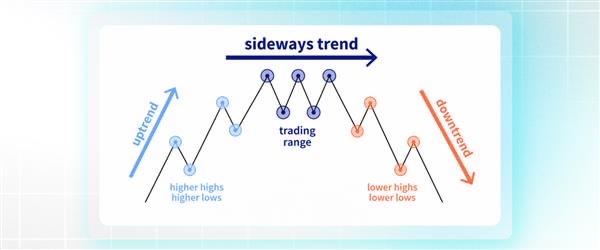
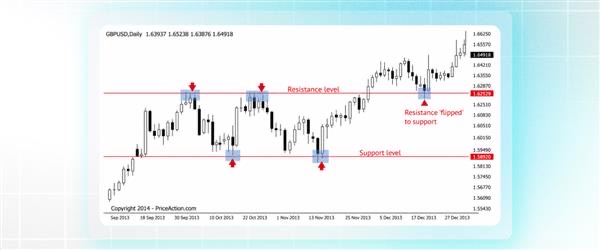
Support and resistance, or range trading: On quieter days, price tends to bounce between a clear ceiling and a clear floor. Range traders buy near support, sell near resistance, and stay out once price genuinely breaks free of that zone. This works well when the market has no strong direction, which is more often than beginners expect.
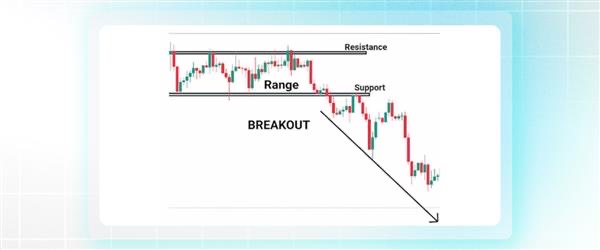
Breakout trading: When price has been coiled inside a tight range for a while, a strong move through support or resistance, especially with rising volume, can signal the start of a fresh trend. This strategy shines around high volatility periods and major data releases, but it also produces more false signals, so it rewards patience and confirmation over speed.
Scalping and news trading exist too, and you will hear about both constantly. Save them for later. They demand split second execution and they are far less forgiving of spread and commission costs on a small account. Master one slower strategy first.
Whichever approach you pick, treat every setup like a short checklist before you risk a single dollar: what exact condition tells you to enter, where exactly does the trade prove you wrong (that is your stop-loss), and how will you take profit. Traders who skip this and jump between five different strategies in a month rarely give any single one a fair chance to work.
One more detail that quietly matters: trade when the market is actually awake. The overlap between the London and New York sessions brings the highest liquidity and the tightest spreads of the day, which makes it the friendliest window for a beginner learning to read price.
Forex Trading Tips for Beginners You Can Use Today
Strategy gets you in the door. These habits are what keep you in the game long enough to get good.
- Start on a demo account, and take it seriously: Use your real position sizing rules from day one. A demo account you treat casually teaches you nothing about how you will behave once real money is on the line.
- Specialize before you diversify: Pick one or two major pairs, EUR/USD and GBP/USD are common starting points, and learn how they actually move before adding more.
- Risk a small, fixed percentage per trade: A commonly used range is 1% to 2% of your account. This single habit is the difference between a bad week and a blown account.
- Place your stop-loss at a real technical level: not wherever feels comfortable in the moment. If the trade idea is invalidated at a certain price, that is where the stop belongs.
- Measure your results in risk multiples, not just dollars: If you risk $50 and make $100, that is a 2R win. Thinking in R keeps your focus on process instead of chasing a high win rate that may not even be profitable.
- Keep a trading journal: Log the setup, the entry, the exit, and the reasoning behind each one. Patterns in your mistakes become obvious once they are written down instead of just remembered.
- Set a daily stop rule: Something as simple as stopping after two losing trades protects you from turning one rough morning into a genuinely damaging day.
- Stay a student of the market: Currency pairs behave differently around central bank meetings, elections, and shifting risk sentiment, so the learning that got you started should never really stop once you go live.
Explore account information
Review account details, terms, and risks on the official CPT website.
Forex Trading Psychology Tips for Beginners
Here is something almost every experienced trader eventually agrees on: once you have a workable strategy, trading stops being a technical problem and becomes a psychological one. Some trading psychology writers put the split as high as 80% mental and 20% mechanics, and while the exact number is debatable, the direction of that idea is not.
· Accept that losing is part of the process: Even genuinely profitable traders lose on close to 40% to 50% of their trades. Success is not measured trade by trade, it is measured by whether you followed your process over dozens of trades.
· Watch fear and greed for what they are: Fear closes winning trades too early and freezes you out of valid setups. Greed pushes you to oversize a trade or hold a winner well past your original target, hoping for more.
· Do not trade to get even: Revenge trading, jumping straight back in after a loss to win it back, is one of the fastest ways to turn a small loss into a genuinely painful one. If you feel the urge to immediately make it back, that is precisely the moment to step away from the screen for a few minutes.
· Let FOMO go: Missing a move costs you nothing. Chasing a move that has already happened usually costs you something real, because you are entering right as the easy money has already been made by someone else.
· Journal your emotions, not just your trades: Write down how you felt going into a trade and how you felt leaving it. Over a few weeks, this reveals patterns, like a tendency to hold losers too long or to abandon a perfectly good plan the moment it gets uncomfortable, that pure numbers never show on their own.
· Size your position for your peace of mind, not just the rulebook: If an open trade has you checking the chart every few minutes or affecting your sleep, it is too big, regardless of what your risk percentage says on paper. A calm trader makes better decisions than a stressed one, every time.
Discipline and patience sound like soft skills until you realize they are the actual product you are selling yourself every time you sit down to trade.
The Bottom Line
Forex day trading is not a shortcut and it is not a lottery ticket. It is a skill, built the same way every other skill is built: small, correct repetitions, over a long enough stretch of time to matter. The traders who make it past that first difficult year are rarely the ones who found some secret setup. They are the ones who respected risk, kept a plan, and treated their own mindset as seriously as their charts.
If you are just getting started, the single highest leverage habit you can build is practicing your strategy on a demo account with your real risk rules already in place, before a single dollar of live capital is on the line. Take the time to build that foundation properly, and the rest of this guide starts working for you instead of against you.
Trading forex and CFDs carries a high level of risk and may not be suitable for all investors. Past performance is not a reliable indicator of future results.
FAQs
1. What is the best forex day trading strategy?
There is no single “best” forex day trading strategy. The most effective approach depends on your trading style, risk tolerance, and market conditions. Popular strategies include trend trading, breakout trading, scalping, and range trading. Successful traders typically combine a well defined strategy with sound risk management and consistent execution.
2. Which day trading strategy is most successful?
Trend following is often considered one of the most successful day trading strategies because it aligns trades with the market’s prevailing direction. However, no strategy guarantees profits. Success depends on factors such as discipline, risk management, market analysis, and adapting to changing market conditions.
3. Can beginners be successful at day trading?
Yes, beginners can become successful day traders, but it requires time, education, and practice. Starting with a demo account, learning technical analysis, developing a trading plan, and applying strict risk management can help build the skills needed before trading with real capital.
4. Can you make $100 a day daytrading?
It is possible to make $100 a day through day trading, but results vary depending on your account size, trading strategy, market conditions, and experience. Day trading involves significant risk, and profits are never guaranteed. Consistent performance requires discipline, proper position sizing, and effective risk management.
5. What is the 3 5 7 rule in forex?
The 3-5-7 rule is a risk management guideline rather than a formal trading rule. While interpretations vary, it commonly suggests:
· Risk no more than 3% of your trading capital on a single trade.
· Limit total exposure to 5% across multiple open positions.
· Aim for a minimum 1:2 or better risk-to-reward ratio, helping profitable trades outweigh losing ones over time.
The exact definition may differ among traders, but the core principle is to preserve capital through disciplined risk management.
Explore account information
Review account details, terms, and risks on the official CPT website.
Related articles
- Forex essentials
Base Currency vs Quote Currency: How Forex Pairs Are Read
A currency pair shows the value of one currency relative to another. The base currency is the first currency in the pair, while the quote currency is the second. The exchange rate tells you how many units of the quote currency are needed to buy one u
12 min read · estimated↗ - Trading essentials
What Is a Trader? Types, Skills, and How Trading Works
A trader is an individual who buys and sells financial instruments or takes positions in financial products to seek profits from changes in market prices. Traders operate across markets such as foreign exchange (forex), shares, indices, commodities,
13 min read · estimated↗ - Digital assets
What Is Litecoin (LTC)? How It Works, Uses, and Risks
Litecoin (LTC) is a decentralised cryptocurrency designed to enable peer-to-peer transactions without requiring a central authority to process them. Launched in 2011, it uses a public blockchain and a proof-of-work consensus mechanism to record trans
12 min read · estimated↗