
Forex essentials
High-Value Currencies Compared: Exchange Rates Against the US Dollar
The highest-value currencies in the world are those that exchange for the greatest number of US dollars per unit. The Kuwaiti dinar, Bahraini dinar, and Omani rial typically lead this ranking, followed by currencies such as the Jordanian dinar and British pound. However, a high nominal exchange rate does not automatically indicate a stronger economy, greater purchasing power, or better trading opportunity.
Currency rankings can change with market prices, so this guide explains the ranking method and the monetary policies behind the figures. It also explores what these exchange rates mean for travellers, businesses, and forex traders.
What Does the Highest-Value Currency Mean?
A currency’s nominal exchange rate shows how much of another currency one unit can buy. For example, if one unit of a currency exchanges for US$3, it has a higher nominal value per unit than a currency that exchanges for US$0.50.
However, nominal value is different from economic strength. A country can have a high-value currency because of its exchange-rate regime and monetary policy, while another country can have a lower-value currency that remains widely traded internationally.
Three concepts help explain the difference:
· Nominal exchange rate: The quoted price of one currency in terms of another.
· Purchasing power: The quantity of goods and services that money can buy.
· Currency strength: The relative performance of a currency against another currency or a defined basket of currencies over a specified period.
These measures serve different purposes. A currency’s nominal value alone does not indicate its future performance or potential trading return.
Selected Currencies Compared with the US Dollar
This table compares ten selected currencies using the article’s historical reference values for 19 October 2026, rounded to two decimal places. It is not an exhaustive global ranking or a source of current exchange-rate quotes. Separately issued currencies with matching pegs may be omitted. The US dollar is the benchmark: 1 USD = 1.00 USD, which is above the BND and SGD values shown below.
|
No. |
Currency |
Code |
Approximate Value in USD |
|
1 |
Kuwaiti Dinar |
KWD |
US$3.26 |
|
2 |
Bahraini Dinar |
BHD |
US$2.66 |
|
3 |
Omani Rial |
OMR |
US$2.60 |
|
4 |
Jordanian Dinar |
JOD |
US$1.41 |
|
5 |
British Pound Sterling |
GBP |
US$1.33 |
|
6 |
Swiss Franc |
CHF |
US$1.21 |
|
7 |
Cayman Islands Dollar |
KYD |
US$1.20 |
|
8 |
Euro |
EUR |
US$1.13 |
— |
US dollar (benchmark) |
USD |
USD 1.00 |
|
9 |
Brunei Dollar |
BND |
US$0.78 |
|
10 |
Singapore Dollar |
SGD |
US$0.78 |
US dollar reference: USD 1 = USD 1.00. Figures above are historical illustrations; check a current, dated quote and applicable conversion fees before making a transaction.
*Note: Exchange rates fluctuate, so the values represent a dated snapshot rather than live or executable prices.
Method: Each value represents the amount of US dollars equivalent to one unit of the listed currency on 19 October 2026. Values are rounded to two decimal places. Where a currency is pegged or linked to another currency, the relevant official exchange-rate arrangement is considered alongside the historical reference data. The Brunei dollar and Singapore dollar are interchangeable at par under the Currency Interchangeability Agreement and have the same nominal value when rounded to two decimal places.
1. Kuwaiti Dinar (KWD)
The Kuwaiti dinar is generally recognised as the world’s highest-value currency by nominal exchange rate against the US dollar. Kuwait manages the dinar against a weighted basket of currencies rather than maintaining a fixed exchange rate against the US dollar alone.
Kuwait’s energy sector is an important part of its economy, while the country’s monetary policy and exchange-rate framework also influence the dinar’s value. However, the currency’s high price per unit should not be treated as a standalone measure of national wealth or economic performance.
2. Bahraini Dinar (BHD)
The Bahraini dinar is pegged to the US dollar at approximately BHD 0.376 per US dollar. This arrangement helps keep the dinar’s exchange rate against the dollar relatively stable, although the value of each currency can still change against other currencies.
Bahrain’s financial services sector and energy-related economic activity form part of its broader economic landscape. The dollar peg is particularly important when assessing the dinar’s nominal value, since the exchange rate reflects a policy framework rather than unrestricted daily price discovery.
3. Omani Rial (OMR)
The Omani rial is also linked to the US dollar through a fixed exchange-rate arrangement. Its commonly quoted rate is approximately OMR 0.3845 per US dollar, which places one rial at around US$2.60.
Oman’s energy resources contribute to its economy, while its exchange-rate policy supports a relatively stable relationship with the dollar. Nevertheless, stability against the dollar does not mean the rial is immune to changes in purchasing power or shifts in its value against other currencies.
4. Jordanian Dinar (JOD)
The Jordanian dinar has maintained a long-standing peg to the US dollar, commonly quoted at approximately JOD 0.709 per US dollar. This implies a nominal value of around US$1.41 per dinar.
The peg helps anchor the currency’s value against the dollar. However, the dinar’s high nominal exchange rate does not mean that Jordan’s economy is larger than economies using lower-value currencies. Economic output, income, inflation, and employment require separate measures.
5. British Pound Sterling (GBP)
The British pound is one of the world’s major freely traded currencies. Unlike the dinars above, sterling’s value fluctuates in response to market demand, economic data, Bank of England policy expectations, and global financial conditions.
Investors and businesses closely follow UK inflation, employment, economic growth, and interest-rate decisions because these factors can affect sterling’s exchange rate. As a result, the pound can appreciate or depreciate against the US dollar even when the longer-term economic outlook changes only gradually.
6. Swiss Franc (CHF)
The Swiss franc is a major international currency whose exchange rate reflects market demand, interest-rate expectations, economic conditions, and changes in investor risk appetite.
The franc is sometimes described as a safe-haven currency because investors may demand it during periods of market stress. However, this behaviour is not guaranteed. Its exchange rate can move in either direction, and a high nominal value does not eliminate currency risk.
7. Cayman Islands Dollar (KYD)
The Cayman Islands dollar is pegged to the US dollar at approximately KYD 0.8333 per US dollar, equivalent to about US$1.20 per Cayman Islands dollar.
The Cayman Islands has an internationally significant financial services industry. Its dollar peg helps maintain a stable relationship with the US dollar, which is relevant for businesses and visitors dealing with both currencies. However, this exchange-rate arrangement does not remove all costs associated with conversion, banking, or international transactions.
8. Euro (EUR)
The euro is the common currency of euro-area member countries and one of the world’s major traded currencies. Its value against the US dollar fluctuates with European Central Bank policy expectations, euro-area economic conditions, and developments in global financial markets.
Unlike a currency maintained at a fixed rate against the dollar, the euro floats in the market. Therefore, its nominal value can rise or fall as traders reassess inflation, interest rates, and growth prospects in the euro area relative to the United States.
9. Brunei Dollar (BND)
The Brunei dollar is interchangeable at par with the Singapore dollar under the Currency Interchangeability Agreement. However, banks and exchange providers may apply transaction fees or other charges.
Brunei’s economy is closely associated with oil and natural gas production. The currency arrangement provides a direct monetary link with Singapore, but it does not mean the two economies have identical economic structures or that every retail transaction will occur without a charge.
10. Singapore Dollar (SGD)
The Singapore dollar is managed by the Monetary Authority of Singapore using an exchange-rate-centred monetary policy framework. Rather than relying primarily on a policy interest rate, the authority manages the Singapore dollar against a trade-weighted basket of currencies within a policy band.
Singapore’s role as a regional financial and trade centre makes its currency relevant to international business and financial markets. Nevertheless, the Singapore dollar’s value against the US dollar fluctuates, and its nominal exchange rate alone does not measure the economy’s competitiveness or a trader’s potential return.
Why Are Some Currencies Worth More Than the US Dollar?
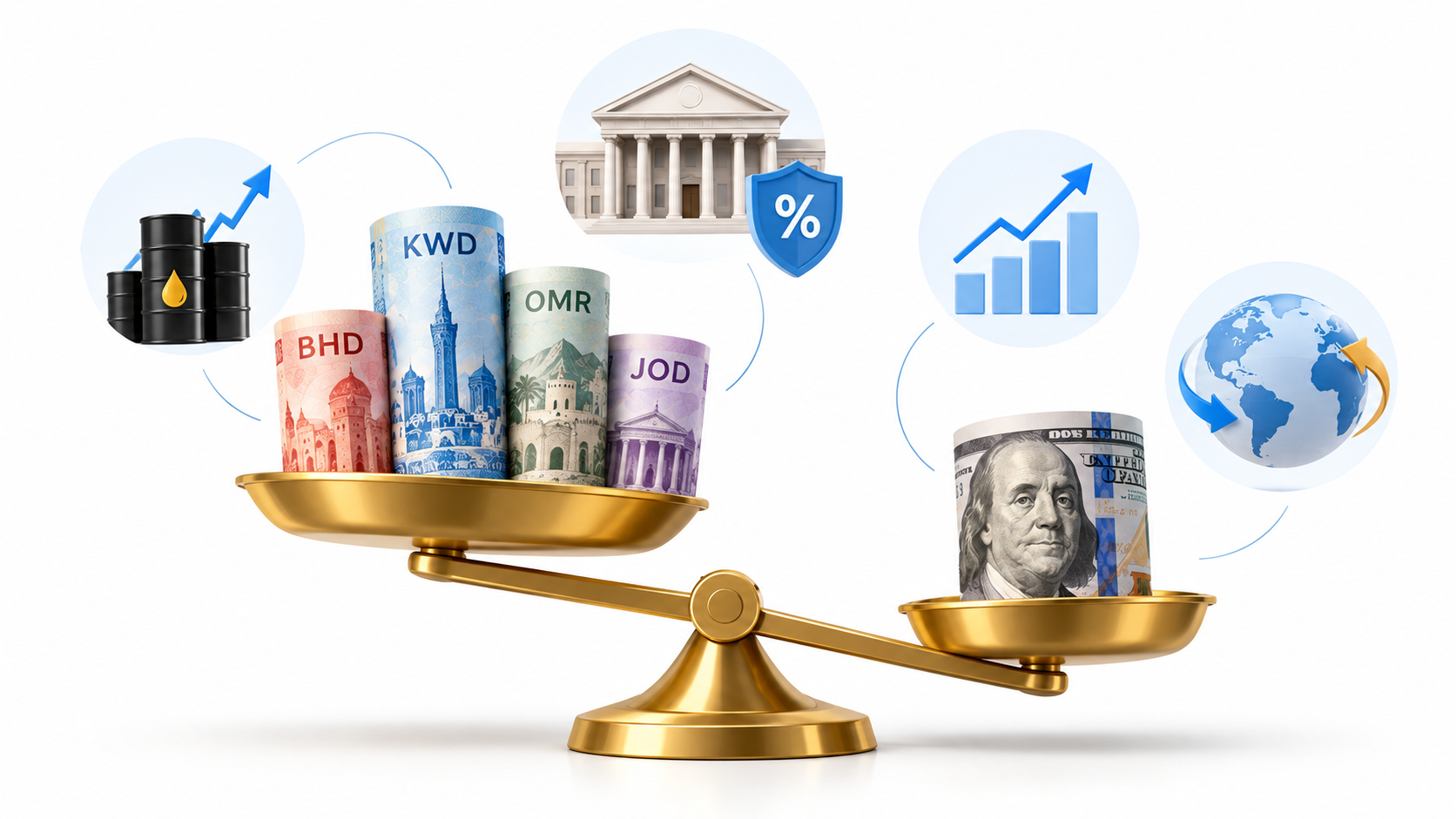
A currency’s nominal value reflects its exchange-rate system and the relationship between its unit of account and other currencies. Several factors help explain why some currencies exchange for more than one US dollar.
Exchange-Rate Policy
Central banks and monetary authorities use different exchange-rate frameworks. Some currencies float freely, while others are pegged to another currency or managed against a basket of currencies.
A peg can help maintain a relatively stable exchange rate against the currency to which it is linked. For example, the Jordanian dinar’s long-standing peg to the US dollar supports its nominal value, while the Singapore dollar follows a managed, trade-weighted exchange-rate framework.
Inflation and Monetary Stability
Inflation reduces the domestic purchasing power of money over time, but it does not determine a currency’s nominal exchange rate on its own. Exchange rates also reflect monetary policy, relative economic conditions, and the currency’s denomination.
A currency with a high nominal value may still experience domestic inflation. Likewise, a currency with a low nominal value can maintain relatively stable purchasing power. The number of currency units in circulation and the denomination system also affect the nominal price of one unit.
Economic Conditions and Investor Demand
Economic data can influence exchange rates when it changes expectations for monetary policy, economic growth, or returns on assets denominated in the currency.
However, the relationship is not automatic. A currency can fall even when economic data improves if markets had already anticipated the result or if other factors dominate sentiment.
Natural Resources and External Trade
Oil and gas exports can generate foreign-currency inflows and support economic activity. However, their effect on exchange rates depends on the country’s monetary framework, capital flows, fiscal policy, and wider economic conditions.
Nevertheless, natural resources alone do not explain a currency’s nominal value. The exchange-rate regime, monetary policy, and broader economic conditions matter too.
How to Calculate a Currency’s Value Against the US Dollar
To compare currencies consistently, use the exchange rate quoted as units of the local currency per US dollar, then calculate the reciprocal.
The formula for calculating a currency’s value against the US dollar is:
USD value per unit = 1 ÷ units of the quoted currency per US dollar
For example, if US$1 exchanges for 0.376 Bahraini dinar (BHD), the value of one dinar can be calculated as follows:
1 ÷ 0.376 ≈ US$2.66
This means one Bahraini dinar is worth approximately US$2.66. The calculation is based on the stated exchange rate and rounded to two decimal places. It excludes exchange fees, spreads, and other transaction costs.
The distinction between the two quote formats matters. A rate of 0.376 BHD per USD does not mean that one dinar is worth US$0.376. Instead, it means one US dollar buys 0.376 dinar, so one dinar is worth approximately US$2.66.
Explore account information
Review account details, terms, and risks on the official CPT website.
Does a High-Value Currency Mean a Stronger Economy?
No. A currency’s price per unit is not a reliable standalone measure of economic strength. The nominal exchange rate depends partly on how a currency is denominated and whether its value floats, is pegged, or is managed by a monetary authority.
For a broader assessment of an economy, consider indicators such as:
· Gross domestic product (GDP) and productivity.
· Inflation and household purchasing power.
· Employment and wage growth.
· Government debt and fiscal sustainability.
· Trade balances and external financing needs.
· Monetary policy credibility and financial stability.
For instance, one country may have a currency worth several US dollars per unit, while another uses a currency worth less than one dollar. That difference alone does not establish which country has higher incomes, more productive industries, or better living standards.
Similarly, a currency’s nominal exchange-rate value does not indicate whether it will appreciate against the US dollar. A trader assessing a currency pair needs to examine the relationship between both currencies and the factors affecting their relative prices.
What the Ranking Means for Forex Traders
Forex trading involves buying one currency while selling another. Consequently, traders assess relative price movements rather than simply choosing the currency with the highest nominal value.
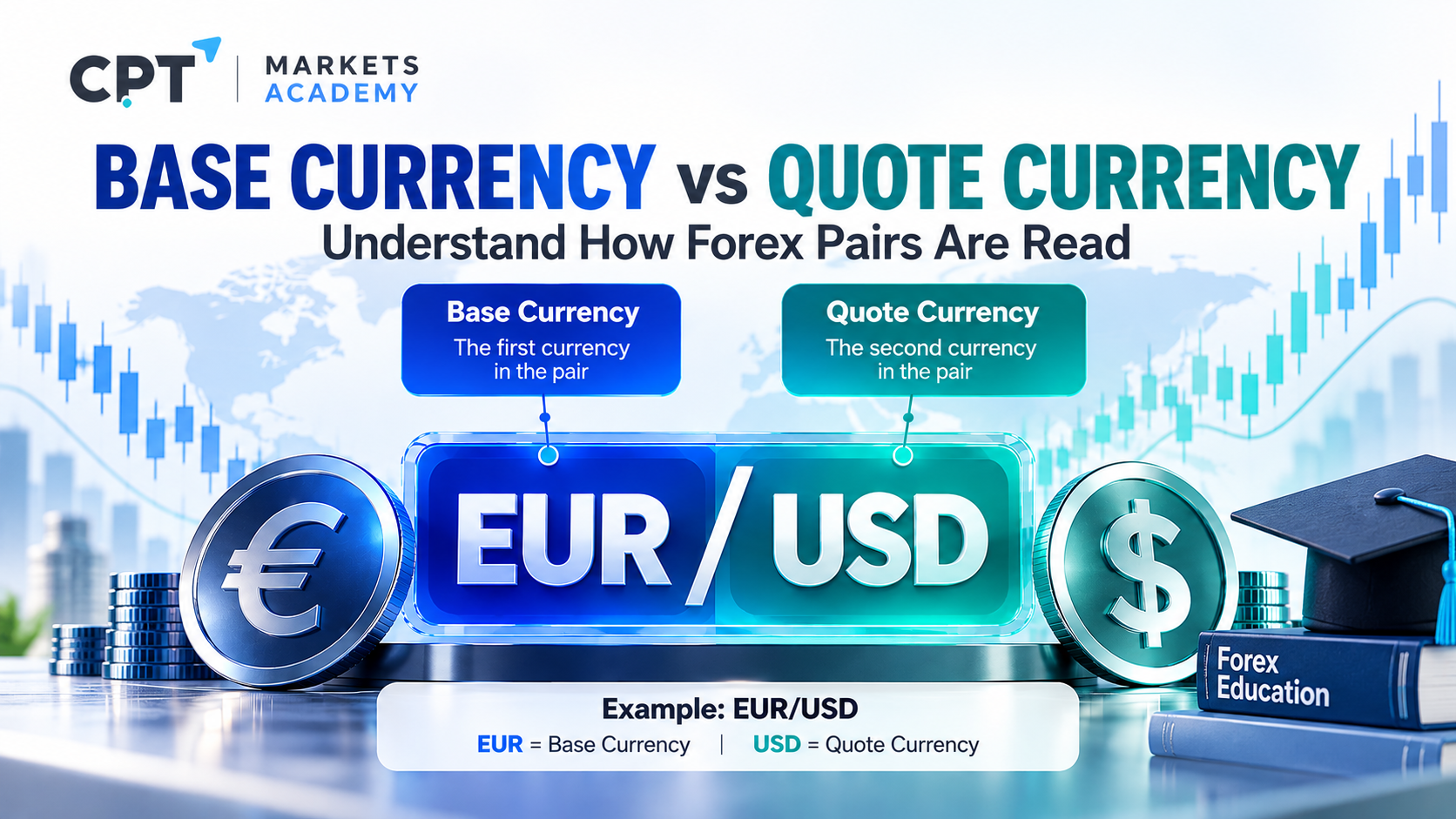
GBP/USD represents the number of US dollars required to buy one British pound. Sterling is the base currency, while the US dollar is the quote currency. If GBP/USD rises from 1.3000 to 1.3100, sterling has appreciated against the US dollar over that interval.
However, a currency’s high nominal value does not guarantee appreciation against another currency. Even currencies with fixed or managed exchange rates may have different trading characteristics, and their exchange rates against third currencies can fluctuate.
Before evaluating a forex currency pair, consider the following:
1. Identify the currency pair. Determine which currency is the base currency and which is the quote currency.
2. Compare economic outlooks. Assess relevant inflation, employment, growth, and interest-rate expectations.
3. Understand the exchange-rate regime. Consider how floating, pegged, or managed arrangements affect currency movements.
4. Assess trading costs and risks. Account for spreads, commissions, overnight financing, slippage, and leverage, where applicable.
5. Avoid treating rankings as forecasts. A currency’s current nominal value does not predict its future performance.
Trading leveraged foreign exchange products, including contracts for difference (CFDs), carries a risk of loss. Leverage magnifies both gains and losses, and prices can move against a position. Product terms, costs, and availability depend on the applicable provider and jurisdiction.
For readers who want to build their foundational knowledge, relevant next topics include understanding forex currency pairs, learning how pips are calculated, and understanding spreads in forex trading.
Key Takeaways
· The Kuwaiti dinar generally has the highest nominal exchange-rate value against the US dollar.
· Exchange-rate regimes, monetary policy, and market conditions influence currency valuations.
· Nominal exchange-rate value does not measure purchasing power, economic strength, or future performance.
· Forex traders assess relative currency movements, market conditions, and trading costs rather than unit prices alone.
· Currency rankings should identify a valuation date and use consistent, verifiable exchange-rate data.
Frequently Asked Questions
1. What Is the Highest-Value Currency in the World?
The Kuwaiti dinar (KWD) is generally recognised as the highest-value currency in the world by nominal exchange rate against the US dollar. Its value reflects Kuwait’s exchange-rate framework and monetary policy. However, being the highest-value currency per unit does not automatically make it the world’s strongest currency by purchasing power, economic size, or investment performance.
2. Is the British Pound Worth More Than the US Dollar?
The British pound often trades above one US dollar per pound, meaning one pound can buy more than one dollar. However, the exchange rate fluctuates with market conditions, economic data, and monetary policy expectations. A higher price per unit does not necessarily mean the UK economy is stronger than the US economy or that sterling will appreciate further.
3. Why Is the Kuwaiti Dinar Worth More Than the US Dollar?
The Kuwaiti dinar’s nominal value reflects Kuwait’s monetary and exchange-rate framework, which manages the currency against a basket of currencies. The country’s oil sector also plays an important economic role. However, the dinar’s high exchange rate cannot be attributed to a single factor, and its value per unit does not independently measure Kuwait’s overall economic performance.
4. Does a High-Value Currency Mean a Country Is Wealthy?
Not necessarily. A currency’s nominal exchange rate is affected by its denomination and exchange-rate regime, so it cannot establish a country’s wealth on its own. Economic output, productivity, household income, purchasing power, inflation, and fiscal conditions provide a more complete picture. A country can have a low-value currency per unit and still have a large, productive economy.
5. Can the Highest-Value Currencies Change Over Time?
Yes. The order can change when floating exchange rates move against the US dollar. Pegged currencies tend to maintain more stable exchange rates against their reference currencies, although their arrangements and policies can change. Therefore, an accurate ranking should identify its valuation date, use consistent reference rates, and distinguish market-driven exchange rates from official pegs.
6. Is the Highest-Value Currency the Best Currency to Trade?
No. A high nominal exchange rate does not mean a currency will rise in value or offer better trading opportunities. Forex traders assess relative price movements, economic conditions, volatility, liquidity, and trading costs. Leveraged products such as CFDs carry substantial risks, so a currency ranking should be treated as educational information rather than a trading recommendation.
Explore account information
Review account details, terms, and risks on the official CPT website.
Related articles
- Forex essentials
Base Currency vs Quote Currency: How Forex Pairs Are Read
A currency pair shows the value of one currency relative to another. The base currency is the first currency in the pair, while the quote currency is the second. The exchange rate tells you how many units of the quote currency are needed to buy one u
12 min read · estimated↗ - Trading essentials
What Is a Trader? Types, Skills, and How Trading Works
A trader is an individual who buys and sells financial instruments or takes positions in financial products to seek profits from changes in market prices. Traders operate across markets such as foreign exchange (forex), shares, indices, commodities,
13 min read · estimated↗ - Digital assets
What Is Litecoin (LTC)? How It Works, Uses, and Risks
Litecoin (LTC) is a decentralised cryptocurrency designed to enable peer-to-peer transactions without requiring a central authority to process them. Launched in 2011, it uses a public blockchain and a proof-of-work consensus mechanism to record trans
12 min read · estimated↗